For US Healthcare Professionals


IT TAKES
looking at my symptoms from every angle for my doctor
TO HELP ME MANAGE MY NT1
—TARA, living with NT1
Individual experiences may vary.
Multiple treatment modalities may be used to manage symptoms of narcolepsy type 1 (NT1)1
Managing NT1 symptoms can be challenging, often requiring a multidisciplinary, multimodal approach.1,3
>50%
OF PEOPLE WHO WERE RECEIVING PHARMACOLOGICAL TREATMENT FOR NARCOLEPSY WERE ON >1 MEDICATION11,*
*Results from a 15-minute online survey conducted in February 2022 of 110 US adults with self-reported narcolepsy type 1 (NT1; n=53), narcolepsy type 2 (NT2; n=35), or narcolepsy of indeterminate type (n=22).11
Sign up to receive resources and videos to help support your patients with NT1

Each patient may utilize a variety of personal symptom management approaches in addition to treatment1,18
It can be important to engage your patients with NT1 in shared decision-making in order to tailor an optimal management plan that addresses their unique needs. This includes an understanding and discussion of potential medical and nonmedical approaches to holistic care, as every patient is unique.
Click below to see the various ways some NT1 patients are managing their symptoms
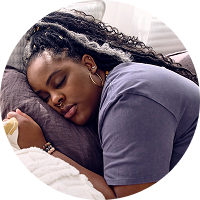
Giving myself enough cushion time for a nap is imperative for me to ensure that I can enjoy the things that I want to enjoy without a fear of experiencing a sleep episode in public.
—JUSTICE, living with NT1
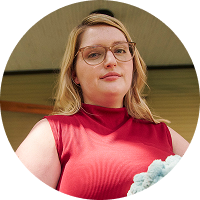
I try to go to bed and wake up around the same times every day. Once I'm awake, I get out of bed. I can’t stay in bed because if I do, then I'll fall back asleep and it won't be a good, restful sleep.
—TARA, living with NT1
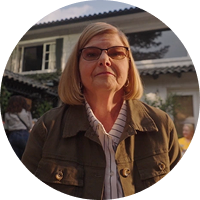
I try to eat healthy and avoid caffeine and alcohol. It feels good to know I’m doing what I can for my overall health.
—MACHEL, living with NT1

Going to support group meetings was a huge step for me, and I think it’s a big step for anybody who decides to attend a meeting.
—CASEY, living with NT1
Patients may need a comprehensive approach to NT1 symptom management18
>50%
of patients with narcolepsy reported trouble with memory or concentration11,*
92%
of patients with narcolepsy reported excessive daytime sleepiness (EDS) as the most troubling symptom11,*
~80%
of patients with narcolepsy reported feeling isolated, depressed, or anxious11,*
74%
of patients with narcolepsy reported cataplexy as one of their most troubling symptoms11,*
*Results from a 15-minute online survey conducted in February 2022 of 110 US adults with self-reported narcolepsy type 1 (NT1; n=53), narcolepsy type 2 (NT2; n=35), or narcolepsy of indeterminate type (n=22).11
NT2=narcolepsy type 2.
There are various approaches to assessing the breadth and severity of NT1 symptoms over time
These are some of the most commonly used measures and scales for specific symptoms. Other validated tools and scales for assessing NT1 symptoms also exist.


Get NT1 news and resources
Sign up to learn more about NT1 care and get resources for supporting your patients.
Recommended for you


Follow us on social media


References
1. Krahn LE, Zee PC, Thorpy MJ. Current understanding of narcolepsy 1 and its comorbidities: what clinicians need to know. Adv Ther. 2022;39(1):221-243. doi:10.1007/s12325-021-01992-4 2. Maski K, Steinhart E, Williams D, et al. Listening to the patient voice in narcolepsy: diagnostic delay, disease burden, and treatment efficacy. J Clin Sleep Med. 2017;13(3):419-425. doi:10.5664/jcsm.6494 3. Maski K, Trotti LM, Kotagal S, et al. Treatment of central disorders of hypersomnolence: an American Academy of Sleep Medicine clinical practice guideline. J Clin Sleep Med. 2021;17(9):1881-1893. doi:10.5664/jcsm.9328 4. Scammell TE. Narcolepsy. N Engl J Med. 2015;373(27):2654-2662. doi:10.1056/NEJMra1500587 5. De Luca R, Nardone S, Grace KP, et al. Orexin neurons inhibit sleep to promote arousal. Nat Commun. 2022;13(1):4163. doi:10.1038/s41467-022-31591-y 6. Mahoney CE, Cogswell A, Koralnik IJ, Scammell TE. The neurobiological basis of narcolepsy. Nat Rev Neurosci. 2019;20(2):83-93. doi:10.1038/s41583-018-0097-x 7. Toor B, Ray LB, Pozzobon A, Fogel SM. Sleep, orexin and cognition. Front Neurol Neurosci. 2021;45:38-51. doi:10.1159/000514960 8. Sakurai T. The neural circuit of orexin (hypocretin): maintaining sleep and wakefulness. Nat Rev Neurosci. 2007;8(3):171-181. doi:10.1038/nrn2092 9. Lipford MC, Ip W, Awasthi S, et al. Demographic characteristics and comorbidities of patients with narcolepsy: a propensity-matched cohort study. Sleep Adv. 2024;5(1):zpae067. doi:10.1093/sleepadvances/zpae067 10. Szabo ST, Thorpy MJ, Mayer G, Peever JH, Kilduff TS. Neurobiological and immunogenetic aspects of narcolepsy: Implications for pharmacotherapy. Sleep Med Rev. 2019;43:23-36. doi:10.1016/j.smrv.2018.09.006 11. Ortiz LE, Morse AM, Krahn L, et al. A survey of people living with narcolepsy in the USA: path to diagnosis, quality of life, and treatment landscape from the patient’s perspective. CNS Drugs. 2025;39(suppl 1):S23-S36. doi:10.1007/s40263-024-01142-8 12. Bassi C, Biscarini F, Zenesini C, et al. Work productivity and activity impairment in patients with narcolepsy type 1. J Sleep Res. 2024;33(3):e14087. doi:10.1111/jsr.14087 13. Davidson RD, Biddle K, Nassan M, Scammell TE, Zhou ES. The impact of narcolepsy on social relationships in young adults. J Clin Sleep Med. 2022;18(12):2751-2761. doi:10.5664/jcsm.10212 14. Quaedackers L, Pillen S, Overeem S. Recognizing the symptom spectrum of narcolepsy to improve timely diagnosis: a narrative review. Nat Sci Sleep. 2021;13:1083-1096. doi:10.2147/NSS.S278046 15. Bassetti CLA, Adamantidis A, Burdakov D, et al. Narcolepsy-clinical spectrum, aetiopathophysiology, diagnosis and treatment. Nat Rev Neurol. 2019;15(9):519-539. doi:10.1038/s41582-019-0226-9 16. Luca G, Haba-Rubio J, Dauvilliers Y, et al. Clinical, polysomnographic and genome-wide association analyses of narcolepsy with cataplexy: a European Narcolepsy Network study. J Sleep Res. 2013;22(5):482-495. doi:10.1111/jsr.12044 17. Black J, Reaven NL, Funk SE, et al. Medical comorbidity in narcolepsy: findings from the Burden of Narcolepsy Disease (BOND) study. Sleep Med. 2017;33:13-18. doi:10.1016/j.sleep.2016.04.004 18. Morse AM, Kim SY, Harris S, Gow M. Narcolepsy: beyond the classic pentad. CNS Drugs. 2025;39(suppl 1):S9-S22. doi:10.1007/s40263-024-01141-9 19. Yan Z, Li J, Yu Y, Qiu S, Wang B, Tang J. Comparative efficacy of new wake-promoting agents for narcolepsy–a network meta-analysis. BMC Neurol. 2025;25(1):466. doi:10.1186/s12883-025-04328-9 20. Dauvilliers Y, Mignot E, Del Río Villegas R, et al. Oral orexin receptor 2 agonist in narcolepsy type 1. N Engl J Med. 2023;389(4):309-321. doi:10.1056/NEJMoa2301940 21. Johns M. A new method for measuring daytime sleepiness: the Epworth Sleepiness Scale. Sleep. 1991;14(6):540-545. 22. Yu J, Zhou Y, Han X, Li Z, Chen F, Zhang L. Impaired vigilance in patients with narcolepsy type 1: a psychomotor vigilance task study. Nat Sci Sleep. 2024;16:2021-2028. doi:10.2147/NSS.S491893 23. Dauvilliers Y, Barateau L, Lopez R, et al. Narcolepsy Severity Scale: a reliable tool assessing symptom severity and consequences. Sleep. 2020;43(6):zsaa009. doi:10.1093/sleep/zsaa009 24. Brown RE, Basheer R, McKenna JT, Strecker RE, McCarley RW. Control of sleep and wakefulness. Physiol Rev. 2012;92(3):1087-1187. doi:10.1152/physrev.00032.2011
TARA: My journey was a long journey. I always felt like something was off. I was misdiagnosed with a lot of things growing up. My parents just told me I had nightmares. But it ended up it was actually sleep paralysis and hallucinations. And, I then also had trouble sleeping. Lost a lot of friends, too, and missed out on a lot of things because of my sleepiness.
I was seeing a doctor and he was kind of concerned and then sent me to a sleep specialist, and that’s when I finally got diagnosed.
I’m Tara and I have narcolepsy type 1. I am a pediatric sleep coach, just started my own business. It is hard to do things with narcolepsy type 1, so I make sure to break tasks up and not do the same thing for too long. So like I’ll work for like an hour, but then I’ll go do laundry or clean, do another task to kind of help, like switch things up and like wake up.
I am taking medication right now. I take nighttime and daytime medication. They do help, but I still do have symptoms. Like, I’m still tired every day. And that doesn’t go away. I’ve always had cataplexy, but I was always told I was just clumsy because I drop things. It’s usually when I’m stressed, my hands give out. So I like to crochet and do pottery and painting because it helps relieve stress, which is a huge trigger for my symptoms.
And knowing about orexin, I mean like knowing there’s an underlying cause for NT1, I feel like, now, it isn’t my fault. And it was not just in my head.
JOEY: “If you could only eat one food and that’s all. What would it be and why?”
TARA: Joey and I, when we first met, he really impressed me. He said something along the lines like that must be difficult for you. He didn’t just be like, oh, you can fall asleep all the time, right?
JOEY: On a day to day basis, I help Tara in pretty much any way that I can think of. Mostly it’s a smaller task here and there that makes a world of difference to her.
TARA: To have a successful date night, we have to eat earlier rather than later just because I get tired.
TARA: “I’m gonna steal some of yours.”
JOEY: “I’m gonna steal some of yours.”
TARA: I need someone who is very empathetic and so, like, having Joey. He’s been great. There are people who care and are empathetic. It’s really nice because I never really thought that I would get that. Narcolepsy type 1—it definitely took things from me, but it also gave me a lot of things. Starting my own business has really helped me in a lot of ways.
Working in the medical field, I just really got tired of having to advocate for myself and being told I had to do it a certain way, when that way didn’t work for me. It was sucking the life out of me and now being my own boss, because I can take breaks when I need to, I can really manage my narcolepsy symptoms.
JOEY: Whether it’s making copies of her pamphlets, like I drive her to make those copies, any way that I can save her a little bit of energy, make her a little bit more comfortable. It’s little things like that. That’s important to communicate.
TARA: My life is going to be different than what I expected it to be, but I want to educate as much as possible, share my story, like talk about it as much as I can because most people don’t really know what it is. It’s not talked about enough and I just want others to know they’re not alone.